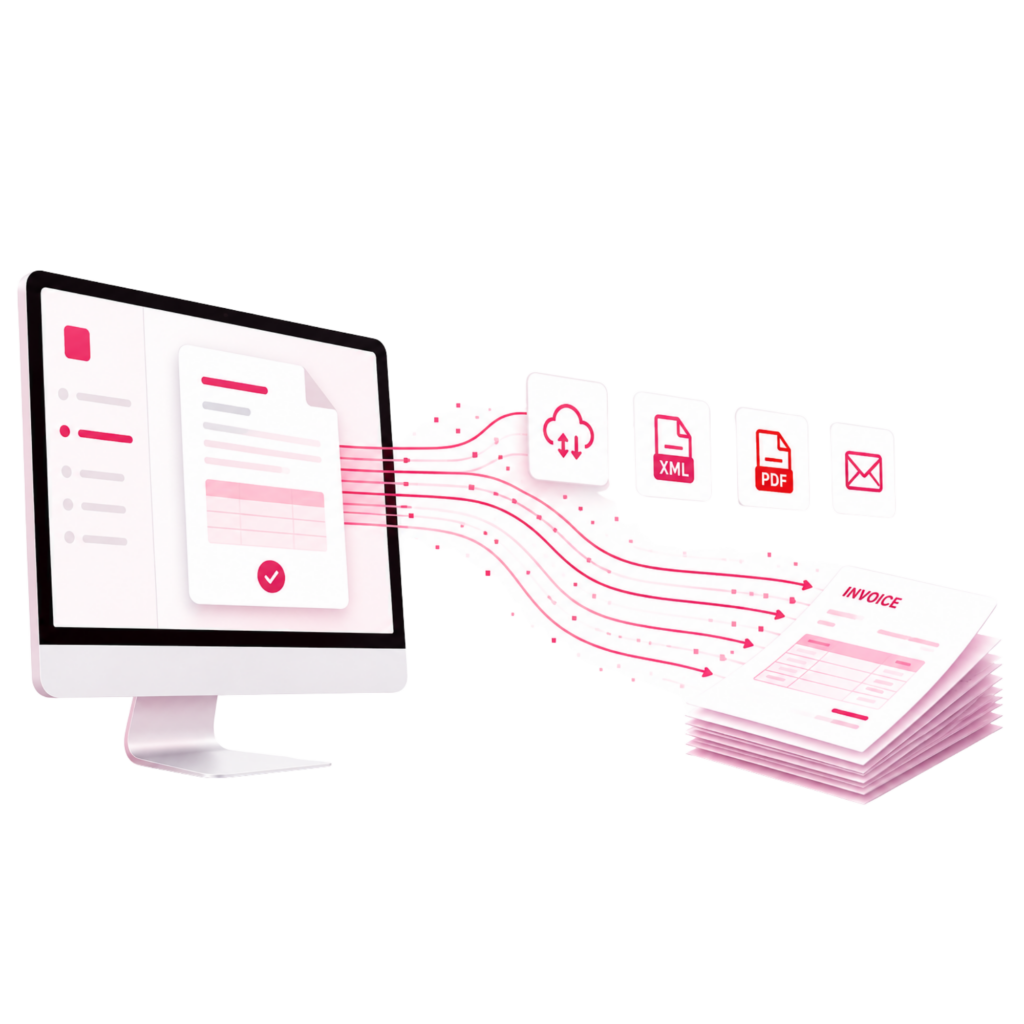
Electronic invoicing as of September 1, 2026: waiting could cost you dearly.
New workflows, certified platforms, mandatory data requirements, e-reporting, adjustments to management software… This reform affects more than just your accounting department; it can directly impact your incoming payments, cash flow, and operational continuity.
Above all, failing to be prepared exposes your business to significant financial penalties.

On September 1, 2026, all companies will be affected.
- All businesses, regardless of size, must be capable of receiving electronic invoices starting September 1, 2026.
- Large enterprises and mid-sized companies (ETIs) will also be required to issue electronic invoices and transmit their transaction and payment data to the tax authorities from that date.
- SMEs, very small businesses (TPEs), and micro-enterprises have until September 1, 2027, to comply with issuance and e-reporting requirements. However, their obligation to receive electronic invoices begins in September 2026.
In other words, even an SME that is not required to issue electronic invoices until 2027 must select an approved platform and be able to properly receive invoices from its suppliers starting in 2026.
According to the Ministry of the Economy, self-employed individuals, professionals in liberal professions, and micro-entrepreneurs are also subject to these rules if they are liable for VAT—including those benefiting from the VAT exemption threshold.
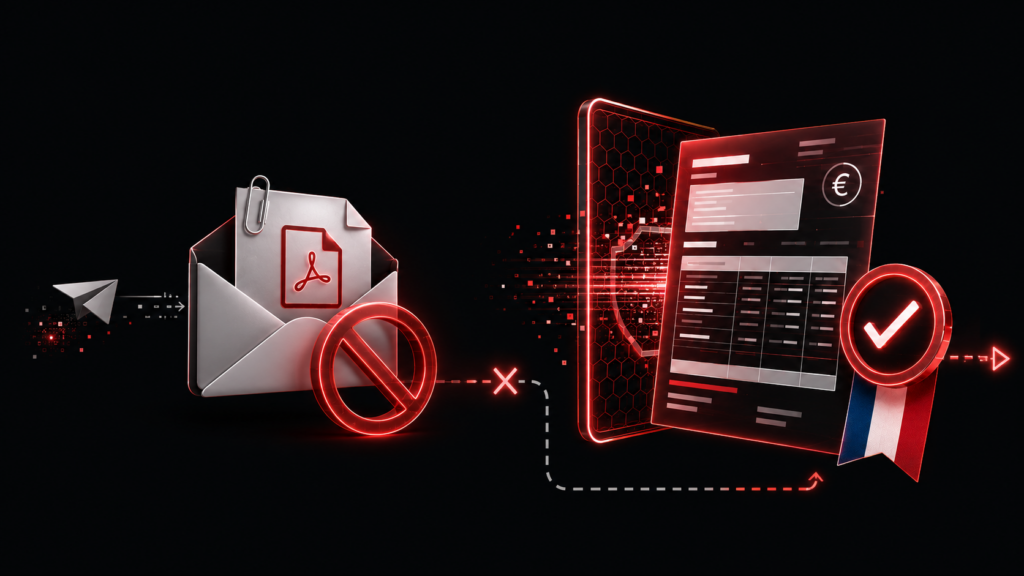
Please note: a PDF sent by email will no longer qualify as a compliant electronic invoice.
It must:
- adhere to a standardized electronic format containing structured data;
- include all mandatory information in the designated fields;
- be transmitted via a platform approved by the authorities, either directly or through a compatible solution.
Continuing to use only your current processes after your obligations come into effect could therefore result in your company being non-compliant.
Fine of up to €50 per invoice not compliant with the electronic processing workflow.
For a business subject to the mandatory electronic invoicing requirement, each invoice that fails to comply with the new process may result in a €50 fine, up to a maximum of €15,000 per calendar year.
Failure to comply with e-reporting obligations also carries penalties:
- €500 per transmission for transaction data, up to a maximum of €15,000 per year;
- €500 per transmission for payment data, up to a maximum of €15,000 per year.
In certain cases and subject to specific conditions, a first offense may go unpenalized if it is rectified voluntarily or within 30 days of an initial request from the tax authorities. However, this measure must not be interpreted as a permanent right to make mistakes.
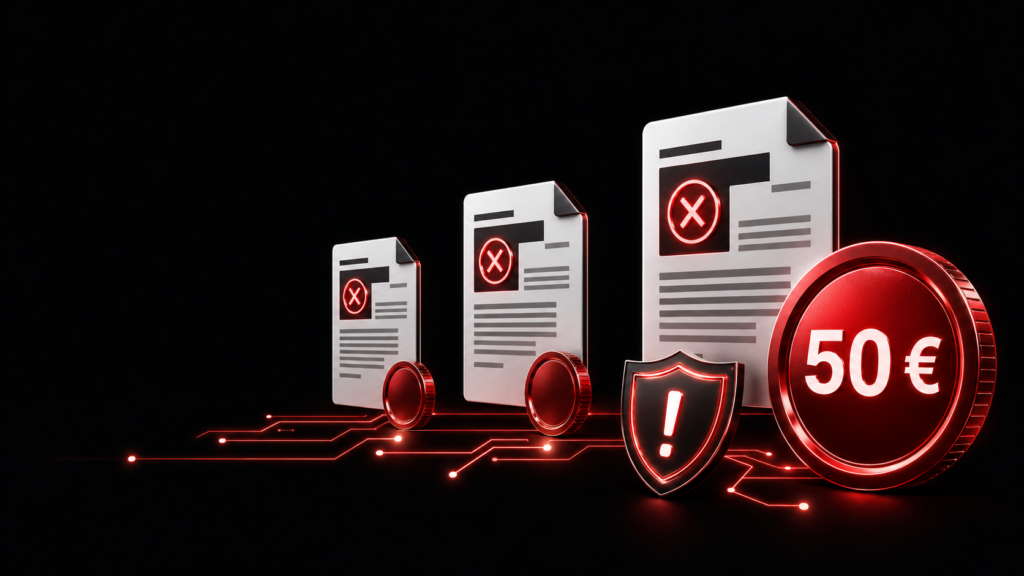
No certified platform to receive your invoices? Penalties may recur.
If the failure to comply persists:
- an initial fine of €500 may be imposed;
- after another three-month period, the fine increases to €1,000;
- a further fine of €1,000 may then be incurred for each additional three-month period during which the situation remains non-compliant.
Waiting for a formal notice before starting the project therefore entails an unnecessary risk, both financial and operational.
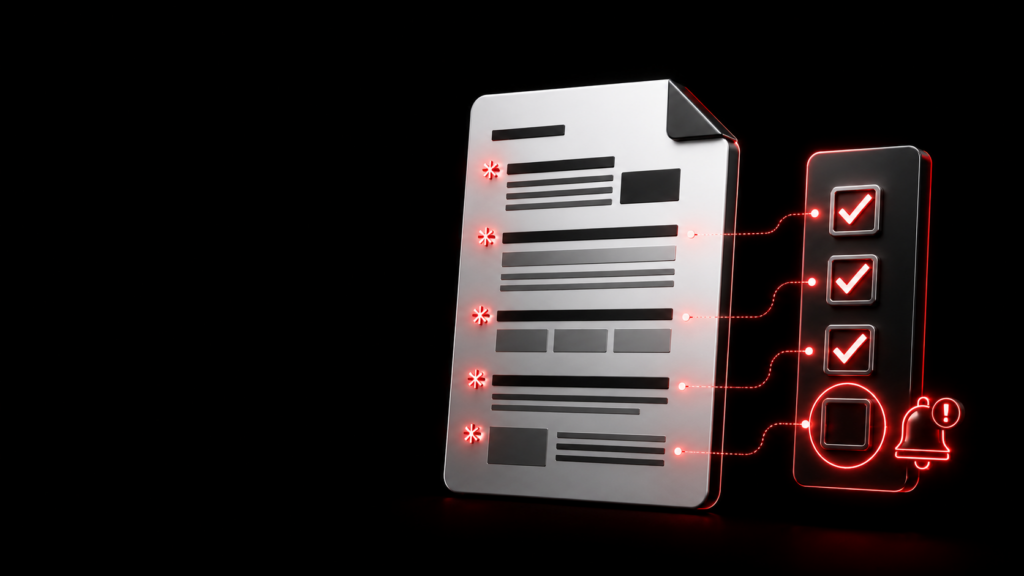
New mandatory disclosures not to be overlooked
- the client’s SIREN number;
- the transaction category: sale, provision of services, or a combination of both;
- a reference to the option to pay VAT on an accrual basis (on debits), where applicable;
- the full delivery address, if it differs from the billing address.
Any omission or inaccuracy on an invoice may itself result in a €15 fine, within the limits set by the General Tax Code.
It is not, therefore, simply a matter of connecting a platform. Customer data, VAT settings, invoice templates, and business rules must also be verified.
The most immediate risk may not be the fine.
- rejected or undeliverable invoices;
- payment delays and cash flow strain;
- duplicate submissions or accounting entries;
- manual re-entry and wasted staff time;
- inconsistent VAT data submitted to the authorities;
- difficulties interacting with clients and suppliers who are already prepared.
From September onwards, an incorrectly addressed or improperly structured invoice will no longer be merely an administrative issue; it could slow down payment collection and directly disrupt business operations.
A grace period at the start, yes. A postponement of the reform, no.
The authorities have announced a lenient and tolerant approach during the initial rollout phase. However, this tolerance does not suspend the timeline or the obligations involved.
To benefit from this leniency in the event of genuine difficulties, the company must be able to demonstrate that it has taken serious steps: selecting a platform, conducting tests, documenting incidents, planning corrective actions, and carrying out remedial measures as quickly as possible.
The guide published by the Directorate General of Public Finance is very clear: inaction, a lack of preparation, the deliberate maintenance of parallel systems, or a persistent refusal to adopt the new system are not covered by this tolerant approach.
Are you truly ready for September 1, 2026?
- identified the workflows subject to e-invoicing and e-reporting requirements;
- selected and designated an accredited platform for receiving invoices;
- verified the compatibility of its ERP, accounting software, or invoicing tool;
- checked the quality of customer and supplier data, particularly SIREN numbers;
- added the new mandatory details and verified VAT rules;
- tested end-to-end workflows, including rejections, status updates, and fallback scenarios;
- trained accounting, administrative, and operational teams;
- documented the actions taken and any incidents that occurred.
If several of these points remain unaddressed, your company is likely not yet ready.
Official sources
- Ministère de l’Économie — Tout savoir sur la facturation électronique pour les entreprises
- Direction générale des Finances publiques — Guide pratique de la facturation électronique, juillet 2026
- Entreprendre Service Public — Facturation électronique : les sanctions évoluent
- Légifrance — Article 1737 du Code général des impôts
- Légifrance — Article 1788 D du Code général des impôts
Article informatif fondé sur les textes et ressources officielles disponibles au 4 août 2026. Il ne constitue pas un conseil juridique ou fiscal personnalisé.